

Rural Hospitals, Long Drives, and Hard Choices
This week the news cycle continues to be dominated by the escalating conflict with Iran. Like many of you here in Tennessee, I am watching these developments with deep concern.
The human cost of war is always the most important cost. But there is also a financial reality we cannot ignore. Early estimates suggest the United States is spending nearly $900 million per day on military operations tied to this conflict.
When our country decides to use military force, those decisions carry deep and widespread consequences. They affect the men and women in uniform and their families, they affect taxpayers, and they reflect the priorities we set as a nation.
So it is fair to ask some simple questions.
What are our priorities here at home? What should they be?
While we can find nearly a billion dollars a day for military operations overseas, families across Tennessee are struggling just to access basic medical care.
And in rural parts of this district, access does not simply refer to the cost or quality of care; it is physical distance.
When the Hospital Is Too Far Away
Consider the reality of a “medical desert”: a motorcycle accident occurs on a quiet rural road. In these moments, the clock is the enemy. But when the nearest hospital has been closed, that clock runs out far too often.
We recently saw a case where emergency services had to bypass a closed facility, traveling miles further than should ever be necessary. The patient survived, but only due to a tremendous stroke of luck; most of the time, a case like this results in a grieving family.. Whether someone lives or dies should not depend on a ZIP code or a hospital’s profit margin, especially when we manage to find a billion dollars a day for violent conflict overseas while basic care at home vanishes.
The Golden Hour
In the emergency medical community, there is a concept known as the Golden Hour.
It refers to the first sixty minutes after a traumatic injury. That window is often the difference between life and death. Rapid treatment during that time dramatically increases a patient’s chances of survival.
I know this from experience. I served as an Emergency Medical Responder. I was not an EMT or a nurse, but I worked in the medical response field long enough to understand how critical those first moments can be.
When hospitals close and trauma centers disappear, that Golden Hour starts to disappear with them.
Every mile matters. Every minute matters.
The Geography of Healthcare
The 6th Congressional District spans the Cumberland Plateau, the Highland Rim, and the Central Basin. It is a beautiful region, but it is spread out.
About 52 percent of this district is rural.
People already drive long distances for everyday needs. When healthcare services disappear, those distances grow.
What used to be a short trip becomes an hour.
What used to be an hour becomes two.
For someone facing an emergency, that distance can become the difference between recovery and tragedy.
The Quiet Consequences
When access disappears, people are forced into choices they should never have to make.
They skip appointments.
They delay necessary care.
They hope problems go away on their own because they cannot afford the time, the gas, or the cost of getting treatment.
The problems that they ignore today evolve into more serious conditions over time.
Conditions that cost more money and take more time and energy to treat.
Conditions that make it harder to work and to enjoy life.
Conditions that often turn out to be fatal.
Sometimes those decisions seem small in the moment.
Sometimes they prove to be tragic.
The Workforce Reality
There is a narrative that people who rely on programs like Medicaid are not a part of our workforce.
That is not what I see, and that is not what the numbers say.
The people I meet across this district are working. They are working service jobs, construction jobs, retail jobs, and part-time jobs while caring for children or elderly family members.
Healthcare coverage often determines whether someone can keep working at all.
A healthy workforce is not a luxury. It is the foundation of a functioning economy.
A Question of Values
We are a country capable of doing big things. When we decide something matters, we find the money.
Right now, we are spending nearly a billion dollars a day overseas. At the same time, we are told that we cannot afford to guarantee healthcare for our own citizens.That is not a question of resources. It is a question of values.
I have said this on the road, and I will continue to say it.
We have the money in this country. We need to develop the values to spend it on the people who need it most.
We can support our troops and protect our national security, while making sure that people in rural Tennessee are not driving hours just to see a doctor.
Those priorities are not mutually exclusive.
But right now, too many families in this district are being asked to carry a burden that should never exist in a country as wealthy as ours.
Why I’m Running
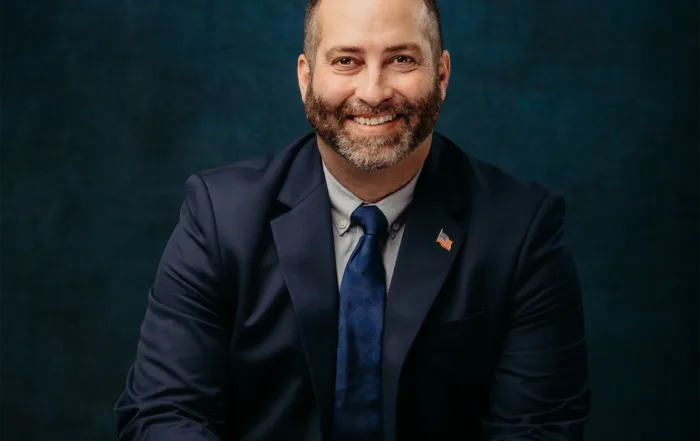
I am running for Congress because the government should reflect the real lives of the people it represents.
Right now, too many of those lives are defined by distance, cost, and hard choices that should not exist in the first place.
We can do better.
We can build a system where a medical emergency does not turn into a life or death situation simply because someone lives too far from a hospital.
We can choose values that put people first.
And we can build a future where no one in Tennessee’s 6th District is left behind simply because of where they live.
That is the kind of leadership I am fighting for.





Together We Rise: A Campaign for Everyone